
A Maturing Market Defined by Stability, Sustainability, and Strategic Opportunity
Over the past two decades, Dubai has transformed into one of the world’s most dynamic real estate markets. Looking ahead to 2030, the city is entering a new phase — one defined not by rapid expansion alone, but by maturity, regulation, and long-term value creation.
For investors and end-users alike, the next cycle presents a more structured, transparent, and opportunity-driven environment.
At Huntington Real Estate, we view the 2030 outlook not as speculation — but as a strategic shift toward institutional-grade real estate investment.
A More Regulated and Transparent Market
Dubai’s regulatory framework continues to evolve, strengthening investor confidence and market stability.
Led by Dubai Land Department and Real Estate Regulatory Agency, the market is moving toward:
- Enhanced escrow protections for off-plan developments
- Increased oversight on developer performance
- Fully digital transaction ecosystems (including Dubai REST)
- AI-driven valuation and blockchain-backed records
This shift reduces speculative risk and positions Dubai as a globally credible, compliance-driven investment market.
Sustainability Becomes the Standard
Sustainability is no longer a premium feature — it is becoming a baseline expectation.
Developers across Dubai are aligning with global ESG standards, focusing on:
- Energy-efficient and LEED-aligned buildings
- Smart home integration and automation
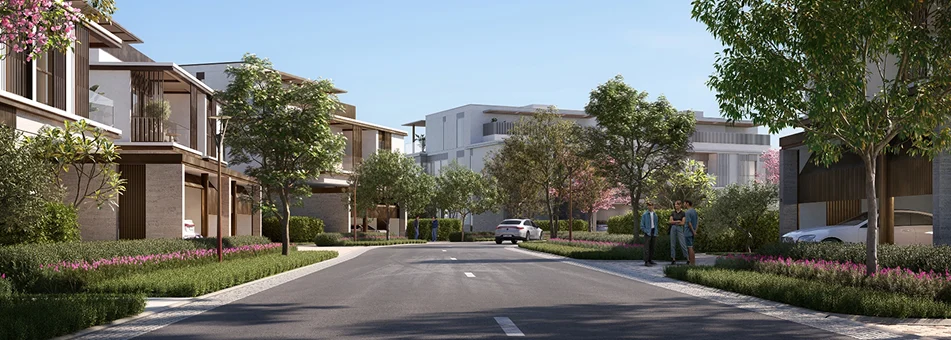
- Low-density, green master communities
- Reduced operational and maintenance costs
Communities such as Tilal Al Ghaf, The Sustainable City, and Dubai South represent the direction of future development.
What This Means for Buyers:
Lower long-term ownership costs, higher tenant demand, and stronger asset resilience.
Population Growth Driving Sustained Demand
Dubai’s long-term vision targets a population of approximately 9 million by 2040 — a key driver of real estate demand.
As a result, emerging residential hubs are gaining strategic importance, including:
- Emaar South
- Dubai Creek Harbour
- Dubai Islands
- Jebel Ali Village
These areas are expected to deliver:
- Strong rental yields
- Capital appreciation potential
- Increased appeal for mid-income and family buyers
Demand is shifting toward livable, community-driven environments, not just prime luxury towers.
A Balanced Market: End-Users and Investors
By 2030, Dubai is projected to maintain a healthier equilibrium between:
- End-user homeowners
- Long-term investors
- Institutional capital
This represents a major shift from earlier speculative cycles.
Buyer behavior is becoming more sophisticated, with focus on:
- Developer credibility and delivery track record
- Flexible and structured payment plans
- Connectivity and infrastructure access
- Sustainable ROI and rental performance
Developers will increasingly compete on quality, experience, and long-term value, not just pricing.
Rise of Fractional and Co-Ownership Models
Fractional ownership is expected to become a mainstream investment strategy by 2030.
This model allows investors to:
- Enter the market with lower capital
- Access premium assets
- Share rental income and appreciation
Key growth segments include:
- Short-term rental and holiday home markets
- Waterfront and beachfront properties
- Branded residences and luxury developments
This evolution opens Dubai real estate to a broader global investor base, increasing liquidity across asset classes.
Strategic Outlook for Buyers
For buyers entering the market today with a 2030 horizon:
Opportunities Include:
- Capital appreciation in emerging communities
- Strong rental yields driven by population growth
- Exposure to a more regulated and transparent system
However, success will depend on:
- Location selection
- Developer quality
- Financing structure
- Professional advisory
Huntington Perspective
Dubai is transitioning from a high-growth market to a globally recognized, institutionally aligned real estate hub.
This shift favors:
- Long-term investors
- End-users seeking stability
- Buyers prioritizing quality over speculation
At Huntington Real Estate, we position our clients to capitalize on this transition — combining market intelligence, strategic advisory, and execution precision.
Conclusion
The road to 2030 presents a clear narrative:
- More regulation
- More sustainability
- More accessibility
- More stability
Dubai is no longer just a growth story — it is becoming a global benchmark for modern real estate markets.
For those who enter strategically today, the next decade represents one of the most compelling real estate opportunities globally.